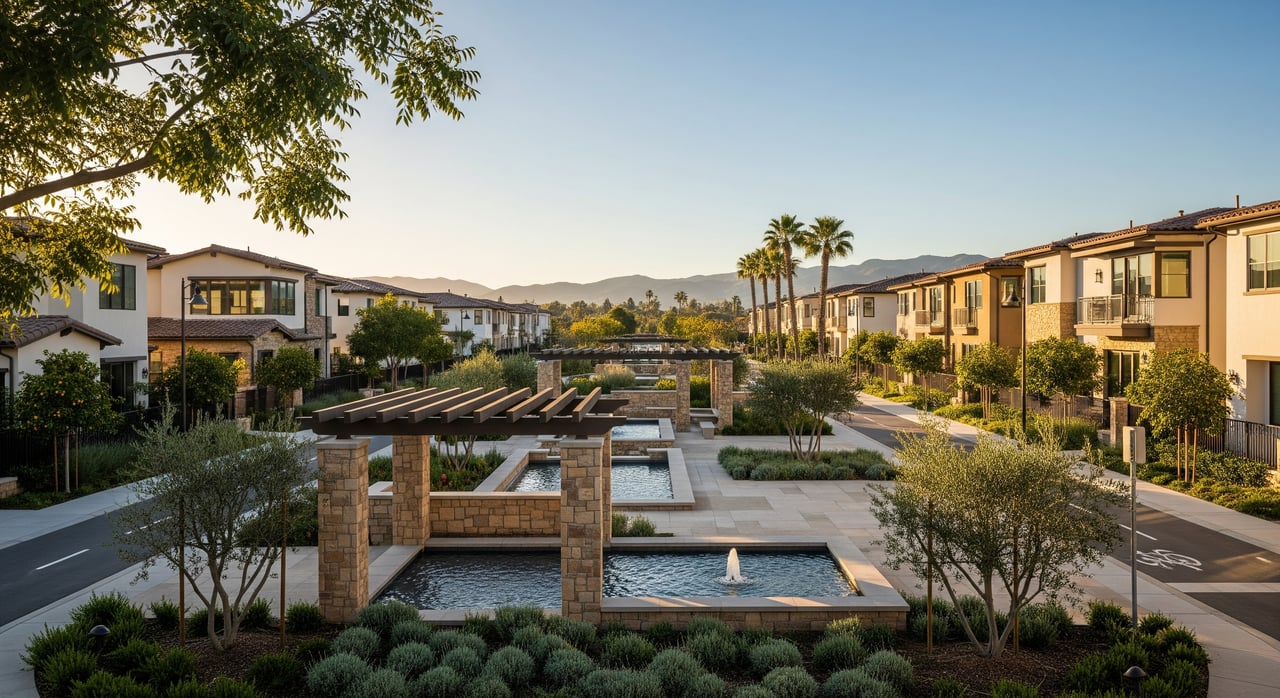
Thinking about buying in Irvine but unsure what a master-planned community really means? You are not alone. When you compare villages like Woodbridge, Turtle Rock, or the Great Park Neighborhoods, the differences in layout, amenities, rules, and costs can feel overwhelming. In this guide, you’ll learn what a master-planned community is, how Irvine’s village model works, what HOAs and Mello-Roos cover, and how to compare neighborhoods with confidence. Let’s dive in.
Master-planned community basics
A master-planned community is a large, long-term development with homes, parks, schools, retail, streets, and utilities designed as one coordinated plan. Builders install major infrastructure up front and roll out neighborhoods in phases over years. These communities often include pools, trails, and community centers, along with design guidelines that shape how the area looks and functions.
In California, many master-planned communities are organized as common-interest developments. That means homeowners associations oversee shared spaces and follow state rules for budgeting, disclosures, and elections. Cities review and approve plans, environmental studies, maps, and financing tools before construction moves forward.
California rules at a glance
- Homeowners associations operate under the Davis-Stirling Common Interest Development Act.
- The City of Irvine handles planning approvals, zoning, and subdivision maps.
- Some public facilities are financed through Community Facilities Districts, often called Mello-Roos, which are special taxes on your property tax bill.
How Irvine villages work
Irvine’s modern layout grew from the historic Irvine Ranch and decades of coordinated planning. The city adopted a village model, where each village includes homes, parks, schools, trails, and a local retail center. Major developers have built out these areas over time with a consistent approach to land use and design.
Typical village components include a mix of single-family homes, condos, and townhomes, plus local parks and recreation centers. You will often find bike and pedestrian greenbelts connecting homes to schools and shopping. Some neighborhoods also have special districts that help fund infrastructure.
Irvine village examples
- Woodbridge: A long-established village with lakes, community centers, and multiple pools.
- Turtle Rock: A residential area near UC Irvine and preserved open space, with hilly terrain and trail access.
- Great Park Neighborhoods: Newer communities developed around the Orange County Great Park with modern amenities and varied lot types.
- Other areas: Northwood, Oak Creek, Portola Springs, Quail Hill, and University/Westpark offer different ages of housing, amenities, and locations.
HOAs and what they cover
Many Irvine villages have both a master association and one or more sub-associations. A master association may maintain larger shared amenities like lakes, main clubhouses, or trail systems. Sub-associations handle project-level items, such as condo building exteriors or neighborhood entrances. During initial buildout, the developer typically oversees the HOA and later transitions control to homeowners.
HOA governing documents include CC&Rs, bylaws, and rules. Budgets and reserve studies guide long-term maintenance. Dues commonly pay for landscaping in common areas, pools, clubhouses, lighting, insurance on shared spaces, and management fees. Some services, such as water, sewer, and trash pickup, are billed by utility providers and are not part of HOA dues.
Mello-Roos and taxes
Mello-Roos are special property tax assessments created through Community Facilities Districts to fund infrastructure, schools, parks, and other public facilities. This cost is separate from HOA dues and appears on your property tax bill. The amount varies by neighborhood and even by parcel, based on the bonds and benefit zones.
You should review the latest property tax bill and seller disclosures to understand any Mello-Roos obligations for a specific home. In some newer Irvine communities, this can be a significant ongoing cost to factor into your budget.
Lifestyle trade-offs in Irvine
Irvine’s village model shapes daily life. Many villages place parks, pools, and playgrounds within a short walk, and greenbelts connect homes to schools and local retail centers. This design supports everyday recreation and reduces the need to drive for basic errands.
Location affects your trade-offs. Older villages closer to job centers may reduce commute time. Newer villages on the edges of the city may offer modern floor plans and newer construction. Housing in established areas often features mature landscaping, while newer areas may have different lot sizes and potential Mello-Roos costs.
School attendance areas are coordinated with development planning. Check specific address assignments directly with the Irvine Unified School District. Public services like police, fire, and city parks are provided by local agencies, while some community amenities are managed by HOAs.
Buyer due diligence checklist
Use this checklist to compare homes across Irvine villages:
- HOA and master association documents: current budget, CC&Rs, bylaws, rules, recent meeting minutes, and insurance certificates.
- Reserves and assessments: reserve study, percent funded, and any recent or planned special assessments.
- Management details: management company name and what services are covered by dues.
- Dues breakdown: monthly HOA dues plus any separate master and sub-association dues.
- Mello-Roos status: special tax amounts on the most recent property tax bill and related disclosures.
- Utilities: water district, sewer, and trash providers; any known irrigation system needs in common areas.
- School assignment: confirm the specific address with IUSD boundaries and enrollment policies.
- Parking and rental policies: rental restrictions, guest parking rules, and towing policies.
- Architectural rules: exterior modification guidelines and approval timelines.
- Amenity access: who can use pools, clubhouses, and parks; reservation systems or waitlists, if any.
- Developer status: whether HOA control has transitioned to homeowners and whether nearby construction could affect daily life.
Questions to ask during escrow:
- Have there been any special assessments in the last five years, and are any planned?
- Is the HOA current on insurance and reserve funding, and is there any pending litigation?
- Who maintains landscaping in public-facing areas, and how often?
- What are the timelines and criteria for exterior approvals?
How to compare villages
- Tally all recurring costs: mortgage, HOA dues, and any Mello-Roos on the tax bill.
- Map daily life: commute routes, school locations, parks, and retail centers.
- Walk the amenities: visit pools, trails, and community centers at different times of day.
- Read the rules: make sure rental, parking, and architectural policies fit your needs.
- Balance new vs established: weigh modern floor plans against mature landscaping and potential differences in taxes and dues.
When you are ready to explore Irvine villages with a local guide, our team is here to help. Get a clear view of costs, amenities, and long-term fit so you can buy with confidence. Connect with Kott & Co. to Request a Local Market Consultation.
FAQs
What is a master-planned community in Irvine?
- A master-planned community is a large, coordinated development with homes, parks, schools, retail, and infrastructure built over time under a single long-term plan.
How do HOA dues differ from Mello-Roos in Irvine?
- HOA dues fund private common-area maintenance and amenities, while Mello-Roos is a public special tax on your property tax bill for infrastructure and facilities.
Do all Irvine villages have HOAs or Mello-Roos?
- Most villages have HOAs, and many newer areas also have Mello-Roos; always verify the specific property’s dues and tax bill.
How are schools handled in Irvine’s villages?
- Public schools are operated by Irvine Unified School District; attendance areas are planned with development, and you should confirm boundaries for the specific address.
What should I review in HOA documents before buying?
- Look for the current budget, reserve study, recent assessments, insurance, rules, litigation status, and any master-plus-sub association dues structure.