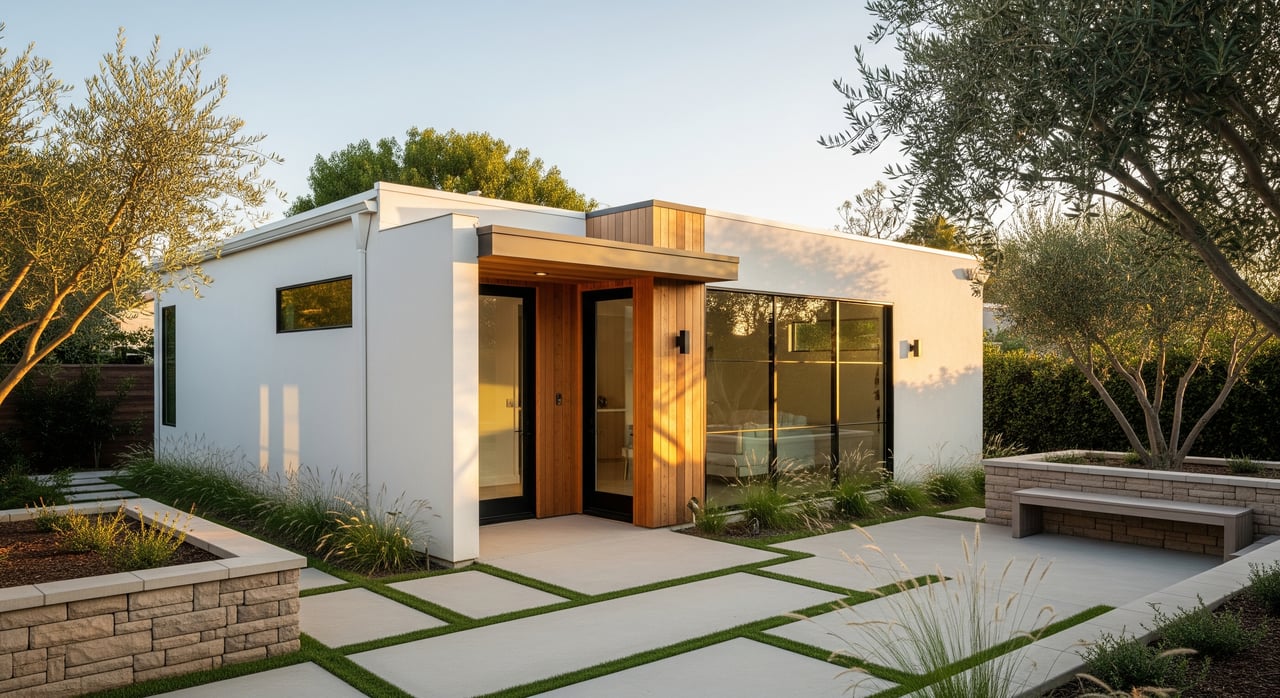
Thinking about adding rental income or space for family without months of back-and-forth plan check? If you own a home in Irvine, the City’s pre-approved ADU Standard Plans can help you move faster and with fewer design surprises. You still need to meet site rules and code, but you can skip custom drawings and long design cycles. This guide shows you what qualifies in Irvine, what the City still reviews, what to prepare, and how to avoid delays. Let’s dive in.
What pre-approved ADU plans are
Pre-approved ADU Standard Plans are building plans the City has already reviewed for code and zoning compliance in a general sense. You choose a plan that fits your lot, then submit site-specific information instead of starting from scratch. The goal is to shorten design time and reduce plan-check cycles.
These plans work within California’s ADU laws that require ministerial, non-discretionary processing for many ADUs. That means decisions are based on clear standards, not subjective review, which adds predictability.
Where they apply in Irvine
Pre-approved plans typically fit standard, single-family lots in Irvine where the ADU can meet setbacks, height limits, lot coverage, and other zoning rules without variances. Many programs include options for detached units and sometimes attached or conversion designs, depending on the available plan set.
There are common exclusions. Lots with environmental constraints, significant slopes, geologic hazards, or parcels with recorded easements that affect where an ADU can go may need extra reports or a custom approach. Historic resources, special design areas, and active code violations can also trigger additional review.
HOA and CC&R rules still apply. City pre-approval does not override private covenants. Review your CC&Rs and secure any required HOA sign-off before you commit to a plan.
What the City still checks
Pre-approved does not mean skip-the-review. Irvine will still confirm site-specific compliance, including:
- Zoning placement and size. Setbacks, height, lot coverage, and allowed unit count on your parcel.
- Utilities. Capacity and connection locations for water, sewer, electric, and gas. New or upsized laterals or meters may be required.
- Easements and access. Public or private easements, recorded restrictions, and access to the primary residence.
- Grading and drainage. Straightforward on flat sites, but sloped sites may need cut and fill calculations or retaining wall details.
- Structural and geotechnical triggers. Soils, slope, shallow bedrock, or expansive soils can require a geotechnical report and engineered foundations.
- Fire and life safety. Emergency access and any required sprinklers or alarms will be reviewed by the local fire authority.
- Energy and green building. Title 24 energy and CALGreen compliance for insulation, ventilation, and other current code items.
- Parking and right-to-access. Verification of any parking reductions allowed under state law and confirmation that access is not blocked.
- Septic or sewer constraints. Parcels not on public sewer or with capacity concerns need special review.
What to prepare before you apply
You can save weeks by assembling accurate documents up front. Use this checklist:
Property and legal
- Recorded deed or a recent title report
- APN and parcel map
- Any recorded easements
- HOA and CC&R documentation, if applicable
Site information
- Recent property survey or scaled site plan showing boundaries, structures, driveway, trees, utilities, and topography
- Current site photos of the exterior and yard
- For sloped lots, a simple topographic survey with contours and slope percentages
Existing building details
- Floor plans and elevations for the primary residence if any tie-ins or conversions are considered
- Utility meter locations and known service points
Technical reports as needed
- Geotechnical report for slope, fill, or soils concerns
- Structural or foundation engineering if retaining walls or modifications are proposed
- Tree report if protected trees could be affected
- Grading and drainage plan if grading is proposed
Utilities coordination
- Contact details and any guidance from local providers for water, sewer, electric, and gas
Team and scope
- Contractor or designer contact information
- Clear scope: detached ADU, garage conversion, junior ADU, approximate size, and bedroom count
Budget and fees
- Plan check, permit, inspection, and possible utility connection or impact fees
- Keep in mind state law may limit some impact fees for smaller ADUs, while other fees still apply
Helpful early checks
- Quick conversation with a City planner about the standard plan you’re considering
- Preliminary questions to fire and utility providers to flag likely upgrades
Step-by-step permit path
- Choose a pre-approved plan that aligns with your lot and needs.
- Prepare your site plan, survey, utility letters, and any required technical reports.
- Submit a ministerial application to the City with the standard plan and site documents.
- Respond to any correction requests or document add-ons during site-specific review.
- Pay fees and secure permit issuance once conditions are met.
- Build, schedule inspections as required, and secure final sign-off or a certificate of occupancy.
Timelines and what to expect
Pre-approved plans can move faster because design back-and-forth is reduced. The timeline often depends on site-specific items like easements, utility upgrades, HOA approvals, or geotechnical needs. If your application is complete and no extra reports are triggered, review can be substantially faster than a custom plan. Actual timing varies by City workload and the completeness of your submittal.
Fees will include plan review, building permits, inspections, and potentially utility connections. Some impact fees may be limited for smaller ADUs under state rules. Always verify current fee schedules and rules with the City of Irvine because regulations evolve.
Common pitfalls to avoid
- Assuming “pre-approved” means “no checks.” The City still verifies zoning, utilities, fire, and site conditions.
- Overlooking easements or CC&Rs. These can require design changes or block a preferred location.
- Underestimating utility upgrades. Electrical service, sewer laterals, or water meter sizing can add cost and time.
- Skipping geotechnical or tree reports when conditions suggest they are needed.
- Misjudging parking. Confirm any parking exemptions and ensure required access remains clear.
- Converting non-permitted structures. Unpermitted work can trigger expensive remediation.
Is a pre-approved plan right for you?
If you want predictable design, reduced soft costs, and a faster path to a permit, pre-approved plans can be a smart route in Irvine. They work especially well on standard, relatively flat lots without complex easements or hazards. You still need a clean, accurate site package, and you should confirm HOA and utility items early.
If you are planning for rental income or multigenerational living, take a moment to model potential rent, operating costs, and how an ADU might affect long-term resale. The right plan can add flexible space and meaningful value when it aligns with your lot and goals.
Next steps
- Review your CC&Rs and any easements on title.
- Order a current survey or create a scaled site plan.
- Speak with a City planner about which pre-approved plan best fits your lot.
- Coordinate early with utility providers and the local fire authority to surface any upgrades.
Ready to map your ADU plans to local market realities in Irvine and North Orange County? For neighborhood insight, pricing context, and a clear strategy, connect with Kott & Co. to Request a Local Market Consultation.
FAQs
What is Irvine’s pre-approved ADU plan program?
- It is a set of already-reviewed building plans that let you submit site-specific information instead of full custom drawings, which can shorten design and plan-check time.
Do HOA rules override City pre-approval for ADUs?
- Yes. Private covenants like CC&Rs still apply. You must review and follow your HOA rules and obtain any required approvals.
How long do permits take with a standard plan in Irvine?
- Timelines vary by workload and completeness, but standard plans can move faster. Site-specific items like easements, utilities, or geotechnical reports often drive the schedule.
What documents should I prepare before applying for a pre-approved ADU?
- Gather your deed or title report, parcel map and easements, HOA documents, a recent survey or scaled site plan, site photos, utility details, and any needed technical reports.
Will I need to add parking for my ADU in Irvine?
- State law limits when parking can be required, but the City will still verify any applicable reductions and confirm that access to the primary residence remains clear.