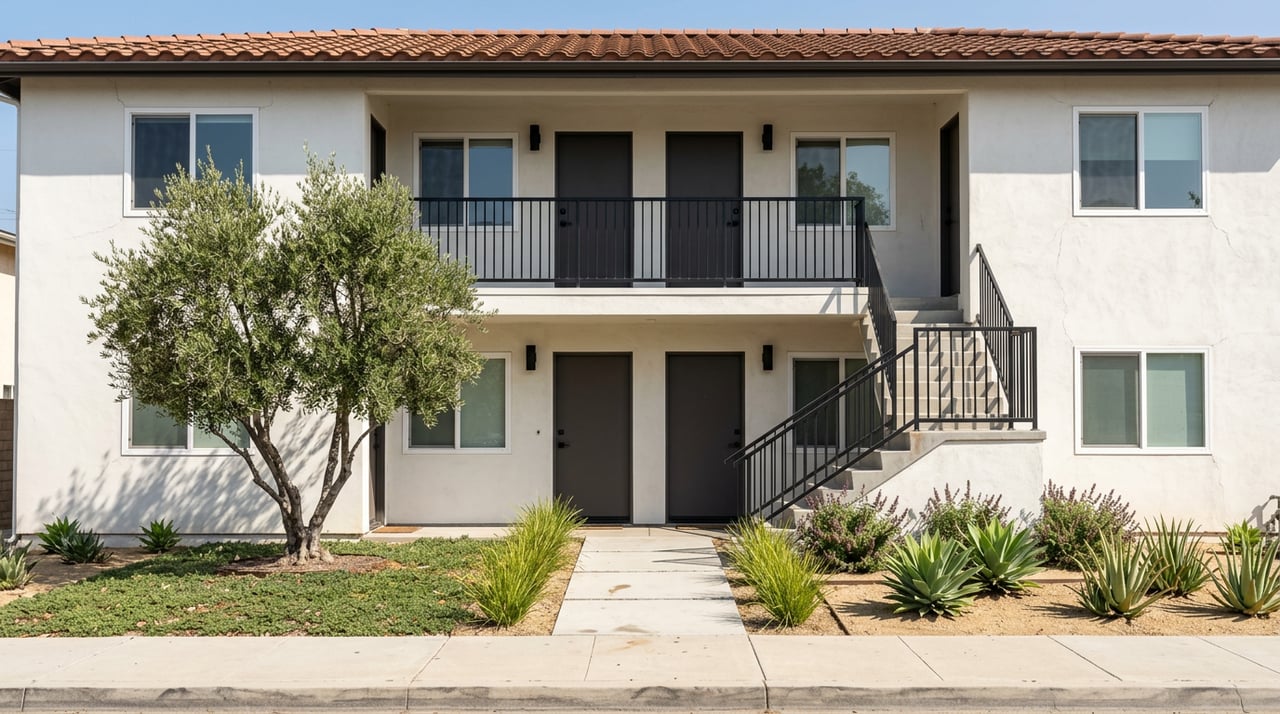
Thinking about buying a duplex, triplex, or fourplex in Fullerton? You are not alone. Investors are drawn to steady rental demand and a location that serves students, staff, and professionals. In this guide, you will see how rents, vacancy, financing, and local rules line up, plus where to look and how to underwrite a smart offer. Let’s dive in.
Why Fullerton works for small multifamily
Demand anchors: CSUF and Downtown
Fullerton’s backbone for rental demand starts with California State University, Fullerton. The university reported about 43,600 students in Fall 2024, which creates consistent leasing needs near campus and a clear annual leasing rhythm for nearby units. You can confirm campus scale on the university’s overview page at Cal State Fullerton.
Downtown Fullerton adds a second demand anchor. The walkable core, restaurants, and the transportation center draw renters who value convenience. That combination tends to support premium rents for units within easy reach of amenities and transit.
Rents and vacancy at a glance
Local rent trackers place Fullerton’s average apartment rent in the mid $2,000s. For example, RentCafe reports an average near 2,527 dollars for Fullerton, with individual unit values varying by size and location. At the Orange County level, recent reports show low vacancies near the 4 percent range and institutional transactions that often price to low to mid single digit cap rates. You can review these regional indicators in the Orange County multifamily market summary.
What this means for you: rents in many 1 to 2 bedroom units will cluster in a narrow band, with premiums for downtown and campus-proximate addresses. Competition and strong fundamentals can compress yields, so plan to underwrite conservatively and make room for realistic operating and turnover costs.
What to buy and where
Common 2 to 4 unit properties
You will mostly see duplexes and older triplex or fourplex buildings. Duplexes are often side-by-side or up/down layouts that work well for an owner-occupant. Triplex and fourplex properties in Fullerton are often garden-style buildings on standard lots. Because 2 to 4 unit properties are treated as residential by many lenders, you may access owner-occupied financing that is different from commercial loan programs.
Sub-areas to consider
- Campus-adjacent streets near Nutwood, State College, and Chapman. These areas see consistent student and staff demand and faster turnover. Rents can be strong when units are well maintained and offer practical features like parking and laundry.
- Downtown Fullerton and blocks near Amerige, Santa Fe, and Chapman. Walkability and dining drive an amenity premium that appeals to young professionals and small households.
- North and West pockets with older garden apartments. Entry pricing can be lower, but plan for more hands-on management, system upgrades, and deferred maintenance.
Rents, turnover, and tenant mix
Typical rents by size
Citywide indexes suggest these broad ranges, which you should verify with active listings and unit-level comps:
- Studios: about 1,700 to 2,000 dollars
- One-bedrooms: about 2,200 to 2,400 dollars
- Two-bedrooms: about 2,800 to 3,100 dollars
These figures reflect late 2025 to early 2026 snapshots and will vary by condition and micro-location. For a current citywide reference point, see the Fullerton average rent trend.
Vacancy and turnover patterns
Orange County’s multifamily vacancy has trended in the low single digits, with recent summaries citing about 4 percent countywide. In Fullerton, expect turnover to concentrate around the academic calendar in spring and early summer for campus-proximate buildings. Professional leases may roll at year-end as well. You can review county-level context in the Matthews market report.
Tenant mix typically includes students near campus and professionals closer to downtown and transit. Unit features such as in-unit laundry, modern kitchens, and on-site parking can move the needle on achievable rent.
Rules you must know
State protections: AB 1482 rent cap and just cause
California’s Tenant Protection Act (AB 1482) generally caps annual rent increases at 5 percent plus regional CPI, up to 10 percent, and adds just-cause eviction protections for covered units. Some properties are exempt, including newer construction and certain owner-occupied duplexes. Review definitions, disclosures, and exemptions in the AB 1482 statute text and confirm applicability for each unit you buy.
Security deposits: AB 12
As of July 1, 2024, California caps most residential security deposits at one month’s rent. There is a limited exception that allows up to two months if the owner has no more than two properties totaling four units. This change affects cash flow at move-in and risk management. Read the details in AB 12.
Zoning, parking, conversions, and STRs
Fullerton’s zoning map outlines what you can build or convert by parcel. Before you make an offer, confirm a property’s zoning, permitted uses, and overlays using the city’s Maps and GIS portal. Parking requirements can affect unit counts and value-add plans, so review the city’s residential parking standards in Section 15.17.080.
Short-term rentals are regulated by the City of Fullerton through a permit program with rules and possible caps. If you are considering any STR strategy near downtown, verify the current permit status and compliance requirements on the city’s short-term vacation rentals page before underwriting that income.
Underwriting essentials
Start with a clear, conservative pro forma based on unit-level data and realistic expense assumptions.
- Gross scheduled rent (GSR) equals the sum of market rents at 100 percent occupancy.
- Effective gross income (EGI) equals GSR minus your vacancy allowance, plus other income such as parking or laundry.
- Net operating income (NOI) equals EGI minus operating expenses like taxes, insurance, management, maintenance, owner-paid utilities, and reserves.
- Cap rate equals NOI divided by the purchase price, before debt.
- Cash-on-cash equals annual cash flow after debt service divided by total cash invested.
Rules of thumb to pressure-test your model
- Operating expenses often land between 30 and 50 percent of collected rents for small multifamily. Older buildings and higher-cost markets tend to push higher. Build a line-by-line budget rather than relying on a single ratio.
- Vacancy allowance of 4 to 8 percent is a reasonable starting point for Fullerton. Consider the lower end for stabilized downtown assets and the higher end for student-heavy properties with concentrated turnover. Recent county context appears in the Matthews market report.
- Regional cap rates for stabilized institutional deals have often been in the low to mid single digits. Expect small 2 to 4 unit properties to trade on different dynamics, including price per unit and owner-occupant demand.
Simple example deal math
Consider a fourplex with two two-bedroom units at 2,900 dollars and two one-bedroom units at 2,200 dollars. Gross scheduled rent would be 10,000 dollars per month, or 120,000 dollars per year. With a 5 percent vacancy reserve, EGI is about 114,000 dollars. If you use a 40 percent expense ratio, operating expenses are roughly 45,600 dollars for an NOI near 68,400 dollars.
If you pay 1,500,000 dollars, the unlevered cap rate is about 4.6 percent. An investor aiming for stronger cash flow would compare that to current interest rates, reserves, and any legal value-add that can raise NOI. Always test sensitivity to higher expenses, slightly longer vacancy periods, and realistic rent growth.
Financing options for 2 to 4 units
FHA for owner-occupants
If you plan to live in one unit, FHA financing can be a powerful lever. Eligible borrowers can put as little as 3.5 percent down on 2 to 4 unit properties, subject to self-sufficiency and reserve tests on 3 to 4 unit deals. Review basics and talk with a local lender familiar with the details. See an overview at The Lenders Network’s FHA page.
Conventional owner-occupied options
Recent agency guideline updates have made some conventional options more accessible for owner-occupied 2 to 4 unit purchases, with industry sources noting paths as low as 5 percent down under specific product rules. Requirements vary by lender and can change, so verify current Fannie Mae and Freddie Mac options with a qualified lender. Read a summary at MortgageResearch.com.
Investor DSCR and portfolio loans
For non-owner investors, lenders often use DSCR-based underwriting with higher down payments and different pricing than standard residential loans. Expect tighter DSCR minimums and more reserves for 3 to 4 unit purchases. Build your financing plan early to align your offer with lender expectations.
Value-add ideas that work in Fullerton
- Upgrade interiors to market-ready finishes. Clean kitchens, refreshed baths, durable flooring, and modern lighting can raise rent and reduce downtime.
- Reconfigure larger floor plans to add legal bedrooms where code allows. Near CSUF, additional bedrooms can improve total rent per unit. Always confirm occupancy and safety requirements before modifying layouts.
- Improve parking and laundry. Adding in-unit laundry or optimizing on-site parking can boost rent. Before you re-stripe or rework parking, review the city’s parking standards to avoid compliance surprises.
Your next steps in Fullerton
- Study rent and vacancy context. Use the Fullerton rent trend and Orange County market report as guardrails, then pull unit-specific comps.
- Confirm rules early. Check zoning on the city’s Maps and GIS portal, read AB 1482 and AB 12, and verify STR policies if relevant on the city’s STR page.
- Build a conservative pro forma. Model multiple vacancy and expense scenarios, include reserves, and test your DSCR and cash-on-cash under different rent outcomes.
- Align financing with your plan. If you will live in a unit, compare FHA and conventional options. If not, talk with lenders about DSCR programs and required reserves.
You do not have to map this alone. If you want a local, data-informed partner to source, underwrite, and negotiate your next 2 to 4 unit investment in Fullerton, reach out to Kott & Co. for a consultation.
FAQs
What are typical Fullerton rents for a two-bedroom?
- Citywide indexes suggest about 2,800 to 3,100 dollars, depending on location and condition. For a current city reference, see the Fullerton rent trend.
How does Cal State Fullerton affect leasing seasonality near campus?
- With about 43,600 students in Fall 2024 at CSUF, many near-campus turnovers cluster in spring and early summer, so budget for concentrated make-readies and marketing.
Do AB 1482 rent caps apply to owner-occupied duplexes in California?
- Some exemptions can apply to certain owner-occupied properties and newer construction, but details matter. Review the definitions and disclosures in AB 1482 and confirm for each unit.
What security deposit can I charge in 2026 under California law?
- Under AB 12, most deposits are capped at one month’s rent, with a narrow exception up to two months if the owner has no more than two properties totaling four units.
Are short-term rentals allowed in Downtown Fullerton?
- The City of Fullerton regulates STRs through a permit program that includes rules and possible caps. Check the current policy on the city’s STR page before underwriting STR income.
What vacancy rate should I underwrite in Orange County for small multifamily?
- County summaries have cited low single digit vacancy near 4 percent, but a 4 to 8 percent allowance is a prudent underwriting range depending on location and tenant mix. See the Orange County market report for context.