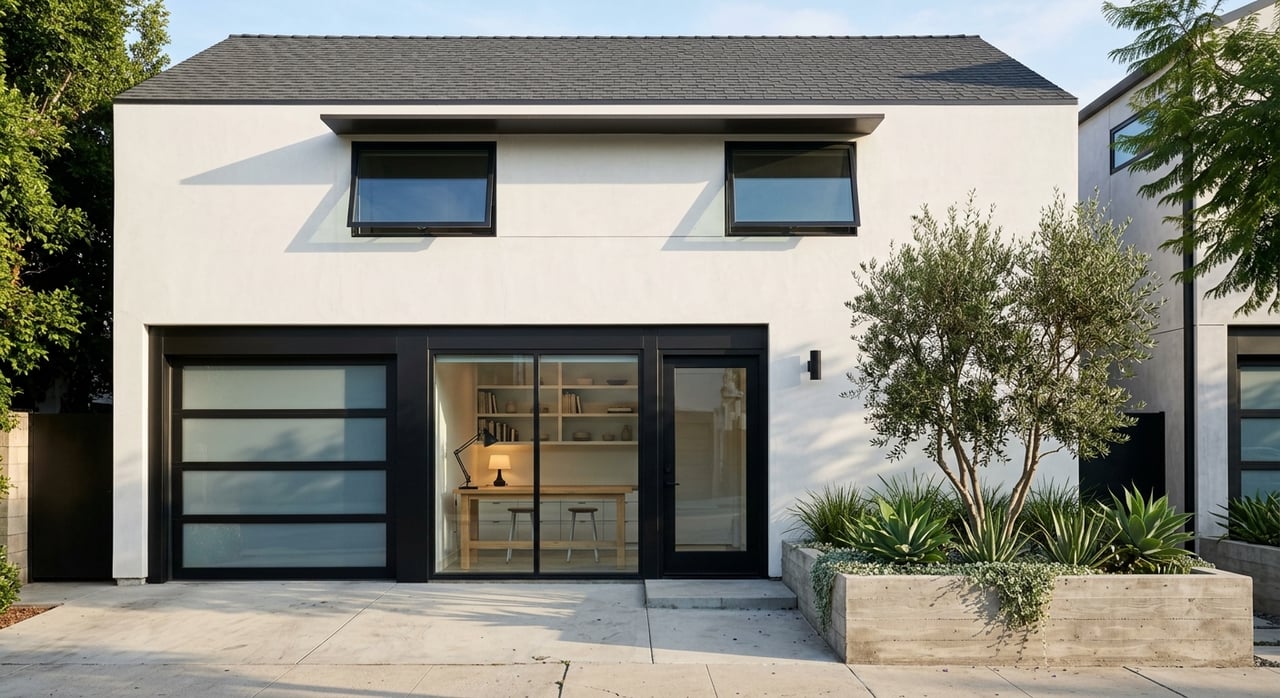
If you want a home that supports both how you live and how you work, Costa Mesa deserves a close look. This city has some of Orange County’s clearest live/work opportunities, but buying one is not the same as buying a standard condo or townhome. If you understand the zoning, financing, and project rules upfront, you can shop with more confidence and avoid surprises in escrow. Let’s dive in.
What a live/work home means
In Costa Mesa, a live/work home is a specific property type, not just a home with a spare bedroom office. The city defines a live/work unit as an integrated residence and work space occupied by a single household in a building designed or modified for both living and working. You can review that definition in the Costa Mesa zoning code.
That distinction matters because a standard home office does not make a property mixed-use. The federal residential loan application instructions also state that a room used as a home office does not, by itself, make a property mixed-use. In other words, a live/work unit is a legally recognized setup, not just a lifestyle preference.
Costa Mesa’s code also makes clear that these properties are meant to function as one integrated space. The residential and work portions are not intended to be split into separate ownership, and the same occupant must live in the unit and conduct business there. That is why title review, HOA documents, and permitted-use language deserve extra attention.
Why Costa Mesa stands out
Costa Mesa has a strong identity that fits the live/work model well. The city brands itself as the City of the Arts, with major cultural anchors like Segerstrom Center for the Arts, South Coast Repertory, and the Orange County Museum of Art. It also supports arts and culture through its Arts Commission, grants, and public art programs.
That creative and entrepreneurial energy shows up in the built environment too. The city’s 2025 General Plan describes the Westside and SoBECA as areas with eclectic uses and notes that Costa Mesa encourages mixed-use urban environments there. For buyers who want a space that supports creative work, design, client-facing services, or a small business operation, that local planning framework is important.
Where to look first
If you are searching for a true live/work home in Costa Mesa, your first search areas should be focused and strategic. Not every mixed-use area allows the same product type, and not every project with an urban feel qualifies as live/work.
Westside and 19 West
The Westside is one of the most important starting points. According to the city’s General Plan, this area includes older industrial land and organically mixed uses, which helps explain why live/work projects appear here.
Within that broader area, the 19 West Urban Plan is especially relevant. This plan includes much of West 19th Street and Harbor Boulevard, plus the cluster between Newport Boulevard and Superior Avenue and the south side of Victoria Street and Placentia Avenue. The city identifies live/work developments as conditional uses in this plan area.
A real-world example is Anchor Live/Work at 1527 Newport Boulevard, a 40-unit project with three-story attached homes, ground-floor work space, roof decks, and a condominium map. The city has also described 17 West at 671 W. 17th Street as a 177-unit live/work and loft development completed in 2020.
Mesa West Bluffs
Mesa West Bluffs is another area buyers should watch closely. The city says this urban plan covers industrial properties south of 18th Street, north of 16th Street, and along Placentia Avenue, and it was adopted to encourage live/work units or residential development.
That planning direction has translated into actual proposals. One example is a 36-unit project in Mesa West Bluffs planned on a former boat storage and repair site, including 30 lofts/live-work units and six residential units. Another current example is the proposed 960 West 16th Street Live/Work project, which describes 38 live/work dwellings with attached workspaces.
SoBECA
SoBECA is another strong search area for buyers who want an urban mixed-use setting. The city’s mixed-use overlay standards describe this as a 39-acre plan area west of the Costa Mesa Freeway, east of the Corona del Mar Freeway, and south of the San Diego Freeway.
In this overlay, mixed-use development, including live/work, is allowed at up to 40 units per acre, with a 450-unit cap. That does not mean every parcel will become a live/work project, but it does make SoBECA one of the clearest policy-supported areas for this housing type.
Harbor mixed-use corridor
Harbor Boulevard can still matter in your search, but it is important to understand the difference between mixed-use and live/work. The city identifies the Harbor corridor as walkable and mixed-use, yet the same overlay standards state that live/work development is not permitted there when the primary use is residential with workspace on the ground level.
That means Harbor may offer urban-style housing and commercial adjacency, but it should not be treated as a primary live/work district. If your goal is a legally recognized live/work unit, Westside, 19 West, Mesa West Bluffs, and SoBECA are more logical places to begin.
What buyers should review before making an offer
Live/work homes can offer flexibility, but they also require more document review than a typical purchase. Before you write an offer, it helps to confirm how the property is classified and whether your intended use fits the project rules.
Confirm the legal use
Your first question is simple: is the unit legally approved as live/work under local zoning? Costa Mesa’s mixed-use overlay is not blanket approval. The code requires a screening application and master plan review, with findings tied to resident-serving amenities and compatibility issues such as noise, odor, vibration, and light.
This is one reason a listing description alone is not enough. A property may be marketed with words like loft, mixed-use, workspace, or studio, but the legal entitlement is what matters for financing and long-term use.
Review HOA and CC&R language
Because the city treats live/work as one integrated occupancy, project documents matter. You will want to review the CC&Rs, condo plan, use restrictions, and any rules that define what kinds of business activity are permitted.
This step is especially important if you expect clients, deliveries, signage, or regular on-site work activity. Even in a legally approved live/work project, HOA rules may shape how the space can function day to day.
Understand project structure
Some live/work properties are part of condominium or common-interest developments. That matters because financing rules can depend not only on the unit itself, but also on the project as a whole.
According to Fannie Mae project standards, no more than 35% of a condo or co-op project can be commercial or allocated to mixed-use. Fannie Mae also notes that live/work projects may be eligible when they comply with local rules and the project remains primarily residential.
Financing a Costa Mesa live/work home
Many buyers ask the same question right away: can you get a conventional mortgage on a live/work property? Often, yes, but the path is usually more detailed than it would be for a standard single-family home or condo.
What lenders and appraisers look at
Fannie Mae’s mixed-use appraisal requirements say the appraiser must describe the mixed-use characteristics, confirm the use is legal under local zoning, identify any impact on marketability, and value the property based on its residential characteristics. That means the appraiser is not just checking square footage and comparable sales. They are also evaluating how the live/work setup fits the market and local rules.
The loan application side matters too. The federal URLA instructions define a mixed-use property as one with business use in addition to residential use, while clarifying that a simple home office does not count. For you, that means it is smart to talk with your lender early and describe the property accurately.
Questions to raise early
Before you get deep into escrow, ask questions like these:
- Is the unit legally approved as live/work under Costa Mesa zoning?
- Is the property part of a condo or common-interest project?
- Is the project primarily residential?
- What business use is permitted under the governing documents?
- Will the lender treat the unit as eligible under current mixed-use guidelines?
Getting those answers early can save time, protect your deposit, and reduce the chance of a late financing issue.
How to shop smarter
Buying a live/work home is partly about lifestyle, but it is also about fit. The best choice is not just the one with the coolest layout. It is the one that aligns with your actual use, financing path, and comfort with the project rules.
A practical search strategy usually includes these steps:
- Start in the right Costa Mesa areas, especially Westside, 19 West, Mesa West Bluffs, and SoBECA.
- Verify whether a property is truly live/work, not simply marketed that way.
- Ask for HOA documents and use restrictions early.
- Speak with your lender before assuming conventional financing will work.
- Review the property with both lifestyle and resale in mind.
That last point matters more than many buyers expect. A live/work home can be a great fit, but it also appeals to a narrower buyer pool than a standard home. Understanding that from the start helps you make a more informed decision.
Why local guidance matters
Costa Mesa live/work homes sit at the intersection of residential buying, project review, and light commercial understanding. That is where local experience can make a real difference. You want clear guidance on where this product exists, how it is regulated, and what details deserve a closer look before you commit.
At Kott & Co., we help buyers navigate Orange County properties with a practical, local-first approach. If you are exploring live/work options in Costa Mesa and want help evaluating neighborhoods, project rules, and purchase strategy, you can reach out for a local market consultation.
FAQs
What is a live/work home in Costa Mesa?
- A live/work home in Costa Mesa is an integrated residence and work space occupied by a single household in a building designed or modified for both living and working, as defined by the city’s zoning code.
Is a Costa Mesa live/work home the same as a home office?
- No. Costa Mesa and federal loan guidance both distinguish a true live/work or mixed-use property from a standard home with a room used as a home office.
Where should buyers look for live/work homes in Costa Mesa?
- Good starting points include the Westside, 19 West, Mesa West Bluffs, and SoBECA, where city planning documents support or encourage live/work development.
Are live/work homes allowed on Harbor Boulevard in Costa Mesa?
- Harbor is a mixed-use corridor, but the city states that live/work development is not permitted there when the primary use is residential with ground-floor workspace.
Can you finance a live/work home in Costa Mesa with a conventional loan?
- Often yes, if the use is legal under local zoning and the project is primarily residential, but lenders and appraisers usually review these properties more closely than standard homes.
What documents should buyers review for a Costa Mesa live/work property?
- Buyers should review zoning status, CC&Rs, HOA rules, condo or project documents, and any permitted-use language that explains how the live/work space can legally be used.